
The Off-Season Is the Honest Season
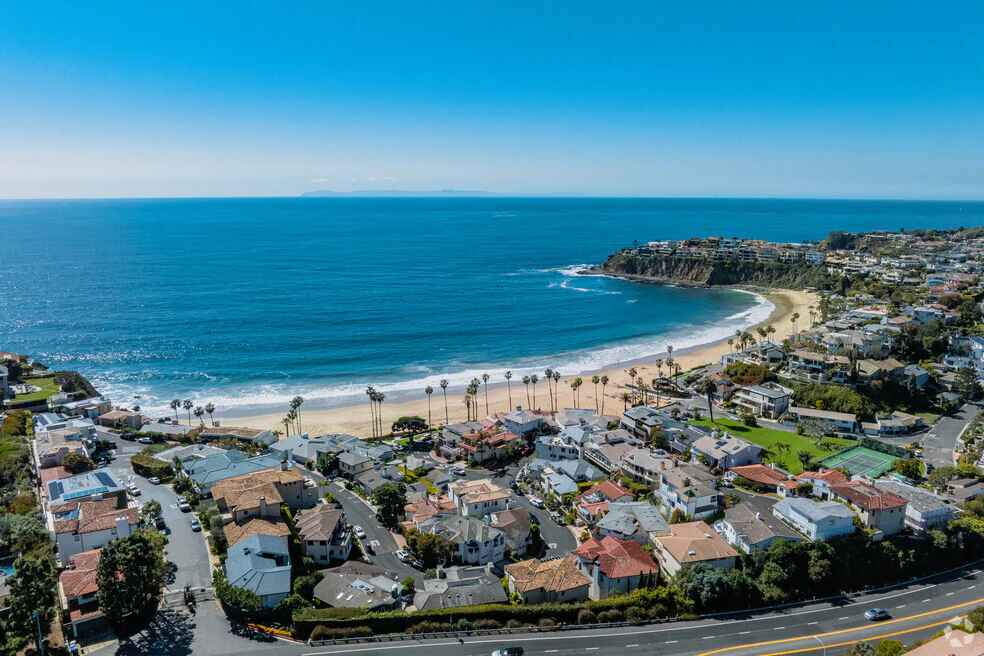
Labor Day weekend is the last heavy tourism weekend of the year on the Orange County coast. By the middle of next week, Coast Highway moves again, the lots empty out, and the towns that spend all summer hosting visitors go back to being neighborhoods.
For anyone who lives in Laguna Beach, Dana Point, Monarch Beach, or Newport Coast, this is the best stretch of the year. For anyone thinking about buying here, it is the most honest one.
It is also the front edge of a winter that forecasters are watching closely.
What Actually Changes This Week
The shift is immediate and it is dramatic. Coast Highway and Broadway thin out. Restaurant reservations that were impossible in July open up on a Friday. Parking near Main Beach and Heisler Park becomes realistic again. The summer festival season winds down, short-term rental turnover drops off, and the trolleys quiet down.
What is left is the version of these towns that residents actually buy into: walkable, quiet, and startlingly beautiful in the fall light. September and October are, by a wide margin, the best weather months on this coast.
What NOAA Is Projecting for Winter 2026-27
NOAA’s Climate Prediction Center has had an El Niño Advisory in effect since June. Its August 13 diagnostic discussion put the odds of a very strong El Niño during fall and winter 2026-27 above 90 percent. The Climate Prediction Center’s August seasonal outlook concentrates the heaviest rain signal over coastal California.
Two details matter for property owners.
First, an El Niño pattern raises the likelihood of a wetter Southern California winter. It does not guarantee one. Forecast probabilities are not promises, and anyone telling you otherwise is selling something.
Second, and more useful: the signal ramps up late, peaking roughly January through March 2027. That means there is a real window between now and the holidays to get ahead of it.
What a Wet Winter Means for a Coastal Home
Coastal Orange County homes take weather differently than inland homes. Salt air, marine layer, bluff exposure, and slope drainage all compound on each other. A hillside lot in Temple Hills, a bluff-side property in Monarch Beach, and an oceanfront home on Coast Highway each have their own exposure profile, and each has its own failure points.
Six areas are worth a walkthrough before the rain starts.
| Area | What to Check | Why It Matters |
|---|---|---|
| Drainage, slope and bluff | Area drains, swales, retaining walls, hillside vegetation, downspout discharge points | Standing water and blocked drains are the most common origin of winter damage on hillside and bluff lots |
| Roof, flashing and skylights | Roof surface, flashing at chimneys and wall junctions, skylight seals, gutters | Coastal roofs age quickly under salt air, and a small flashing failure becomes ceiling damage in the first real storm |
| Windows and door seals | Weather stripping, window seals, slider tracks, exterior caulking | Ocean-facing glass absorbs wind-driven rain that inland glass never sees |
| Decks, seawalls and hardscape | Deck substructure, waterproof membranes, seawalls, patio and terrace drainage | Elevated winter swell and king tides put real load on oceanfront and beachfront hardscape |
| Insurance review | Coverage limits, deductibles, flood and water intrusion exclusions | Review the policy before the rain, not after. Mid-storm is the wrong time to learn what is excluded |
| Inspection timing | Schedule a walkthrough during or just after a storm | A dry August inspection cannot show you where water actually travels on the property |
Fix It on Your Timeline, Not the Buyer’s
Deferred water intrusion is the ugliest item that can surface in the middle of an escrow. A ceiling stain that appears during the buyer’s inspection contingency costs far more than the repair itself. It costs leverage, it costs time, and it usually costs price.
Owners planning to list in spring 2027 should use this fall to address drainage and roof items on their own schedule, with their own contractor, at their own number. A repair completed in October is a line item on your disclosures. The same repair discovered in March is a renegotiation.
The Off-Season Is the Honest Season
Summer showings sell you a version of these towns that exists for about ten weeks a year. Between September and the holidays you get the real commute, the real parking situation, the real noise level, and the real neighborhood. That is not a small thing when you are committing at this price point.
The inventory picture helps too. Fall listings face fewer competing buyers, and sellers still on the market after summer have generally recalibrated their expectations.
And a wet winter is a diligence advantage, not a drawback. Touring a coastal property after a genuine storm tells you more in twenty minutes than a summer walkthrough tells you in an hour. Where does the water go? Does the driveway sheet toward the garage? Is there staining at the base of the retaining wall? You cannot ask those questions in August.
The Aaronson Group has closed more than 1,000 homes across coastal Orange County, and the properties that hold their value through a heavy winter are consistently the ones where somebody paid attention in the fall.
Here are two of our current listings in Laguna Beach:

View 2155 Temple Hills Drive Listing
View 1585 S. Coast Hwy #47 Listings
Planning a fall list date or a winter purchase on the coast?
Kevin Aaronson has spent nearly 28 years and more than $750M in personal sales in these communities. Call or email to talk through your property before the rain starts.
949-388-5194 | info@previewochomes.com
Kevin Aaronson | The Aaronson Group | Keller Williams Luxury | DRE #01259966
Enjoy this blog post? Click here to subscribe for updates

Leave A Comment