
Homeowners Insurance Has Moved to the Front of the Transaction
For years, homeowners insurance was a late-stage item. Buyers found a home, opened escrow, and handled the policy somewhere between the inspection and the final walkthrough. That sequence no longer works. In coastal Orange County, insurability now shapes what a buyer can afford, how long a listing takes to sell, and in some cases whether a deal closes at all.
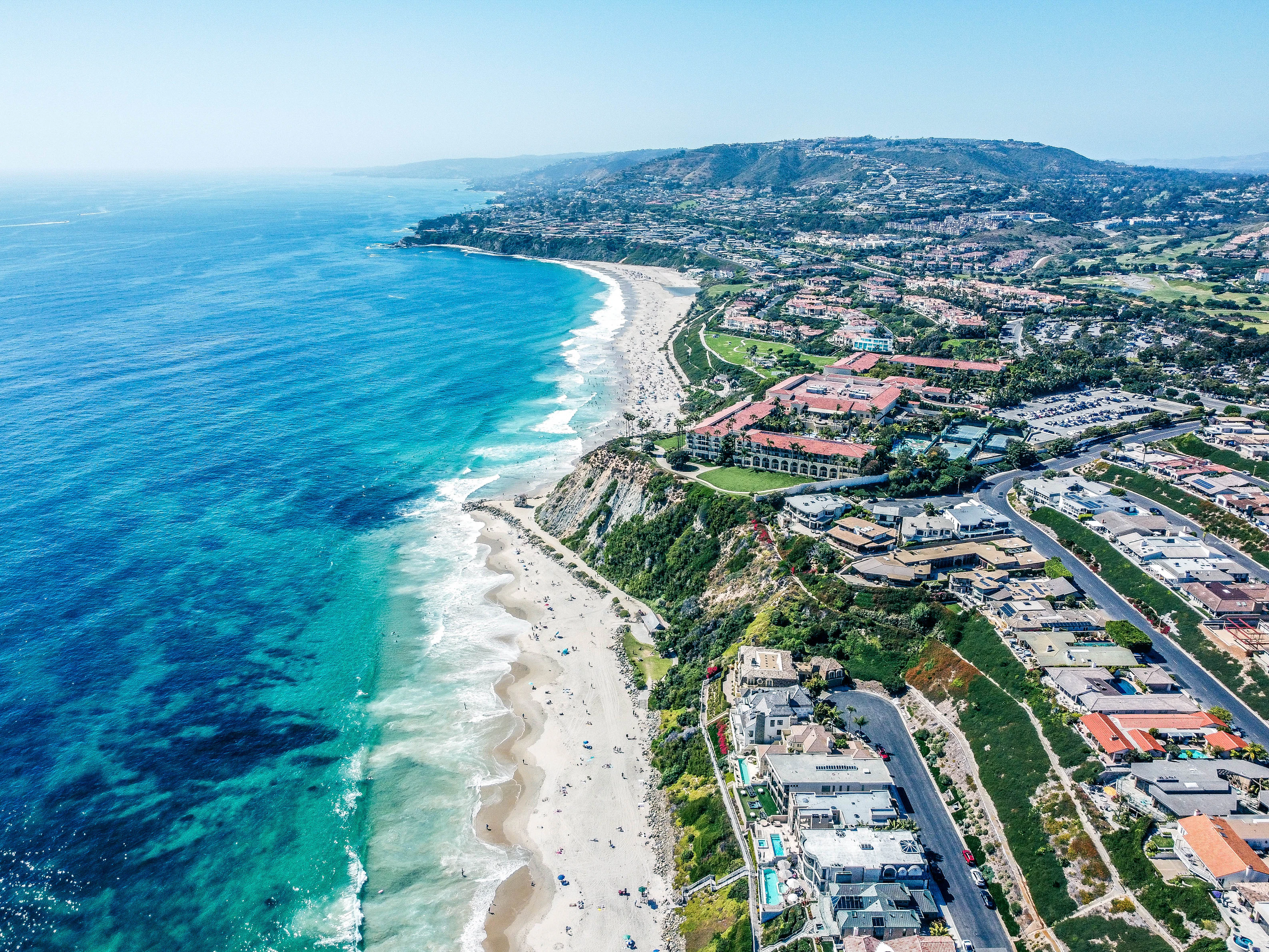
This is not only a wildfire-zone conversation. It reaches ocean-bluff properties in Monarch Beach, canyon-adjacent homes in Laguna Beach, hillside estates in Newport Coast, and harbor-view properties in Dana Point. Kevin Aaronson and The Aaronson Group now treat the insurance question the same way they treat financing: something to resolve before an offer is written, not after.
Premiums Are Rising Almost Everywhere
The Consumer Federation of America found that homeowners insurance premiums rose in 95 percent of U.S. ZIP codes between 2021 and 2024, with roughly one-third of those ZIP codes seeing increases above 30 percent. The steepest statewide jumps were not in the places most people would guess: Utah at 59 percent, Illinois at 50 percent, Arizona at 48 percent. The average annual premium climbed $648 over that period, reaching $3,303.
The West is carrying the heaviest load. A National Association of Insurance Commissioners report released in mid-2026 found that inflation-adjusted average premiums rose 43.3 percent in the West between 2018 and 2024, compared with 18.3 percent in the Northeast. Availability moved in the same direction. Company-initiated nonrenewal rates increased across every region of the country, and in the West they climbed from roughly 8 per 1,000 policies in 2022 to 25.1 per 1,000 by 2024.
The transactional impact is measurable. In an Insurance.com survey of consumers who shopped for or sold a home, 47 percent ran into some form of insurance difficulty. Twelve percent backed out of a purchase over the cost of coverage, and 21 percent either backed out or had a sale fall through. Because lenders require coverage as a condition of funding, an uninsurable property is, for most buyers, an unfinanceable one.
Availability Is Improving. Price Is Not.
California is running two trends at once, and coastal Orange County owners are feeling both.
On the availability side, the picture is better than it was two years ago. Under Insurance Commissioner Ricardo Lara’s Sustainable Insurance Strategy, the Department of Insurance reported in May 2026 that nine insurers had publicly committed to writing more California business, including six of the state’s ten largest home insurance groups. Farmers eliminated its monthly cap on new homeowners policies in November 2025, and the Department approved its Sustainable Insurance Strategy rating plan the following May. FAIR Plan growth has slowed accordingly: roughly 16,000 residential policies were added in the first quarter of 2026, down from quarterly growth of 35,000 to 50,000 through much of 2024 and 2025.
On the price side, the Department of Insurance approved an average 29.1 percent dwelling rate increase for the FAIR Plan, down from the 35.8 percent originally requested. It applies to all new and renewal business on or after October 15, 2026. The increase is weighted toward the wildfire portion of the premium, so the highest-risk addresses will see well above the average while some lower-risk properties may see little change.
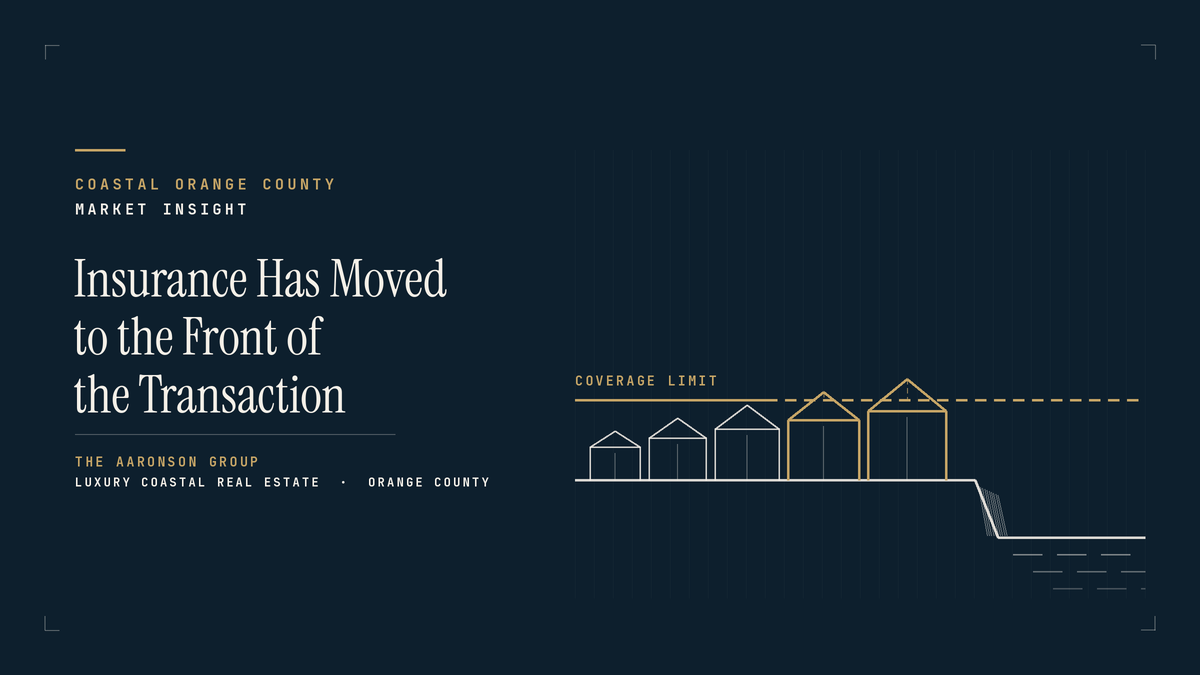
For luxury coastal owners there is a second constraint. FAIR Plan residential dwelling coverage caps at $3 million, which sits below the replacement cost of a large share of homes in Monarch Beach, Newport Coast, and Laguna Beach. That gap is typically bridged with a Difference in Conditions (DIC) policy layered over the FAIR Plan coverage, and it needs to be priced before an offer, not discovered during escrow.
| What Underwriters Look At | Why It Matters Locally |
|---|---|
| Wildfire hazard zone and brush proximity | Drives carrier appetite in Laguna Beach canyons, Temple Hills, Top of the World, and hillside Newport Coast |
| Roof type, age, and vent construction | Class A roofing and ember-resistant venting can change both eligibility and premium |
| Replacement cost, not sale price | Custom coastal construction can exceed standard policy limits and push an owner toward a DIC wrap |
| Claims history on the address | Prior water or fire claims follow the property, not just the owner |
| Defensible space and vegetation management | Documented clearance can move a marginal risk back into the admitted market |
| Intended use (primary, second home, short-term rental) | A vacation or rental use case requires different coverage than an owner-occupied policy |
Insurability Is Now Part of Marketability
If coverage on your property is expensive or difficult to place, the buyer pool shrinks. That is a pricing issue and a days-on-market issue, and it is one of the few marketability factors a seller can influence before listing.
Practical steps The Aaronson Group recommends before going live:
- Pull your current declarations page and confirm what a new buyer would actually be quoted, which is often not what you pay on a long-held policy.
- Assemble documentation that helps an underwriter say yes: roof age and material, recent electrical or plumbing updates, brush clearance records, and any hardening work already completed.
- Identify whether the address is realistically placeable in the admitted market or is likely a FAIR Plan plus DIC situation. Knowing this in advance prevents a surprise renegotiation at day 12 of escrow.
- Disclose known coverage issues rather than letting a buyer discover them during contingency review. A late discovery costs far more leverage than an early disclosure.
Quote the Property, Not the Category
Premiums in coastal Orange County vary dramatically between two homes a mile apart. A general estimate is not useful. The number you need is a property-specific quote on the actual address, ordered as early in the process as possible.
Build the premium into your monthly carrying cost alongside principal, interest, taxes, and any association dues before you set a price ceiling. A rising premium can move an otherwise comfortable purchase outside your budget without the price ever changing. Where coverage looks tight, keep the insurance review inside your contingency period so you retain the ability to renegotiate or exit.
Coverage adequacy deserves the same attention as availability. Recovery timelines after a major fire are measured in years, not months. In Pacific Palisades, city building records showed 41 certificates of occupancy issued across 39 distinct addresses as of September 1, 2026, roughly 20 months after the January 2025 fire, with more than a thousand homes still under construction. Policy limits, extended replacement cost, ordinance-and-law coverage, and loss-of-use duration all matter more than most buyers assume at the point of purchase.
Underwrite Insurance Before You Underwrite Returns
Insurance costs are reshaping the economics of vacation and rental property in coastal Orange County. With Western premiums up more than 43 percent on an inflation-adjusted basis since 2018 and nonrenewals rising across the region, coverage is no longer a rounding error in a pro forma.
Three questions belong in the analysis before an offer:
- Can this address be reliably insured, not just insured today? Renewal risk matters as much as the first-year premium.
- What does the coverage cost at full replacement value? Custom coastal construction rarely fits inside standard limits.
- Does the rental plan require specialized coverage, and is that rental plan even permitted? Short-term rental use often needs an endorsement or a separate policy. Laguna Beach no longer issues new short-term lodging permits in its R-1, R-2, and R-3 residential zones, where most single-family homes sit.
A property with slightly softer rental revenue and stable, affordable coverage can outperform a higher-revenue address carrying uncertain insurability. Run the returns after insurance, not before.
Related reading: Short-Term Rental Rules in Laguna Beach, What Luxury Buyers Must Know
Coastal OC Insurance FAQ
When should I get an insurance quote?
Before you write an offer when possible, and no later than the start of your contingency period. Ordering a quote after loan approval is how deals get repriced late.
Is the FAIR Plan a normal homeowners policy?
No. It is a fire-focused policy of last resort with a $3 million residential dwelling cap. Most coastal luxury owners who use it pair it with a Difference in Conditions policy to restore broader coverage.
How much is the FAIR Plan increasing?
The California Department of Insurance approved an average 29.1 percent dwelling rate increase effective on new and renewal business October 15, 2026. It is an average, not a flat rate. The increase is concentrated in the wildfire portion of the premium, so high-risk addresses will see more.
Are carriers writing in Orange County again?
More are. Nine insurers have publicly committed to expanding under the state’s Sustainable Insurance Strategy, and FAIR Plan growth has slowed sharply. Availability and price are still moving in different directions, so a quote on your specific address remains the only reliable answer.
Does a beach or bluff location automatically mean high premiums?
Not automatically. Brush proximity, construction type, replacement cost, and claims history drive the number more than the view does.
Can I do anything to lower my premium before listing?
Often yes. Roof condition, ember-resistant venting, documented defensible space, and updated systems all factor into underwriting. Improvements made before listing can widen your buyer pool.
The Aaronson Group is a real estate team, not an insurance provider. This article is general market information, not insurance or legal advice. Figures cited reflect published reporting from the California Department of Insurance, the National Association of Insurance Commissioners, and the Consumer Federation of America as of September 2026 and are subject to change. Coverage decisions should be made with a licensed insurance broker.
Thinking about buying or selling on the coast? Let’s look at the numbers, including the ones most agents leave until escrow.
Kevin Aaronson | Principal & Team Leader
Keller Williams Luxury | DRE #01259966
949-388-5194 (call or email)
Enjoy this blog post? Click here to subscribe for updates

Leave A Comment